Guide 01 Radio listening independent information
History of radio in Portland, Oregon: from 1922 to listener-supported radio
Portland was on the air within two years of the first US broadcast licences. This guide sticks to dates that are documented in public sources and says so where histories disagree.
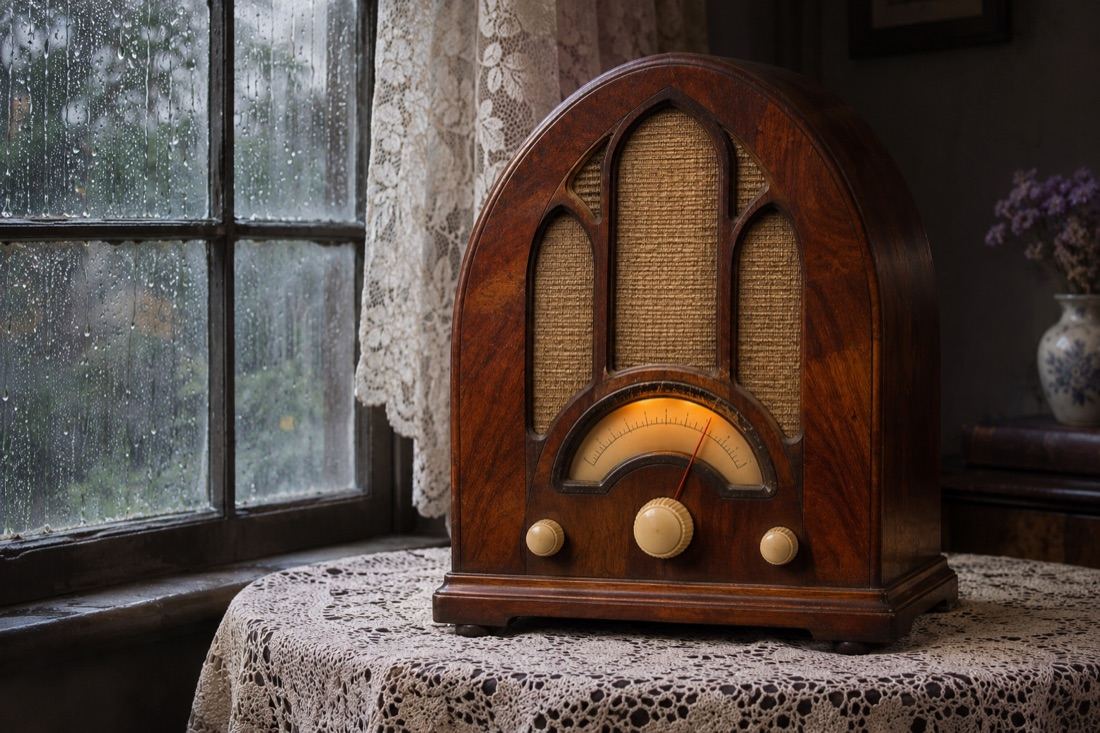
Radio before the first licences
Before regular broadcasting, radio was a pastime for amateurs who built their own transmitters and receivers and sent Morse code or the occasional spoken message. In the early 1920s the federal government began issuing licences for stations meant to broadcast to the public, each with a randomly assigned set of call letters. Cities across the country, Portland among them, saw their first stations appear within a few months of each other.
That period is hard to describe in neat steps, and local histories do not always agree on who was first. The sections below follow stations whose early dates are recorded in public references.
1922: a newspaper goes on the air
The Oregonian, the city's major daily, launched a radio station in March 1922. The Oregon Encyclopedia gives the launch month, and station histories usually give March 25, 1922 as the first air date, with the licence issued a few days earlier to the newspaper's publishing company under the call letters KGW. The newspaper's building is described as the home of the city's first commercial radio station, and the paper is described as the first on the West Coast to own and run its own station.
Other local histories point out that amateur experimenters were putting regular programs on the air around the same time, so "first" depends on how you define a regular, licensed broadcast. Treat any single claim of being first with a little caution.
The Oregon Encyclopedia also documents a long-running variety program from this station, the Hoot Owls, which is a good starting point if you want to see what early studio entertainment looked like. The Oregonian kept the station until 1953, when it was sold to a broadcasting company. The frequency later carried different call letters.
A second early station and a new name
Another Portland station began life elsewhere. A licence issued in April 1922 to an electric company in Hood River gave a station the call letters KQP. It moved to Portland in the fall of 1925, with its first Portland broadcast on November 9, 1925, from a studio in a downtown hotel linked by telephone line to a transmitter north of town. In April 1926 a Portland newspaper acquired it and the call letters became KOIN.
KOIN became an affiliate of a national network and carried network and regional programs during what is often called the golden age of radio. In March 1941 it moved along the AM dial, one of many stations that changed frequency when an international agreement on North American broadcasting took effect that year.
The 1960s: radio paid for by its listeners
Commercial stations dominated the dial for decades. In the 1960s a different model arrived. A group of Portland residents organized around the idea of listener-supported radio, and the station that grew from it, KBOO, says it first went on the air on June 3, 1968, at about 10 watts from a donated room in a downtown building. A stronger transmitter followed in 1970. It remains a volunteer-driven community station on the FM dial.
That story, a small station started by people who wanted other voices on the air, is the root of what the community radio guide describes.
Where to research further
If you want primary material, start with the archives. The University of Oregon's special collections hold records from KOIN covering 1926 to 1952, and the finding aid is listed on the Archives West site. The Oregon Encyclopedia has short articles on early stations and programs. The Federal Communications Commission publishes a history of commercial radio that explains the national setting. Newspaper archives from the period are the best place to confirm a date.
This site is not an archive or a station directory. Frequencies, call letters and owners change over time, so check a current source before relying on any of them.