Guide 05 Radio listening independent information
What is college radio? Campus stations explained
A college station is a radio station run by or for a school, usually with students at the microphone. It is a training ground and often a place where unusual music finds an audience.
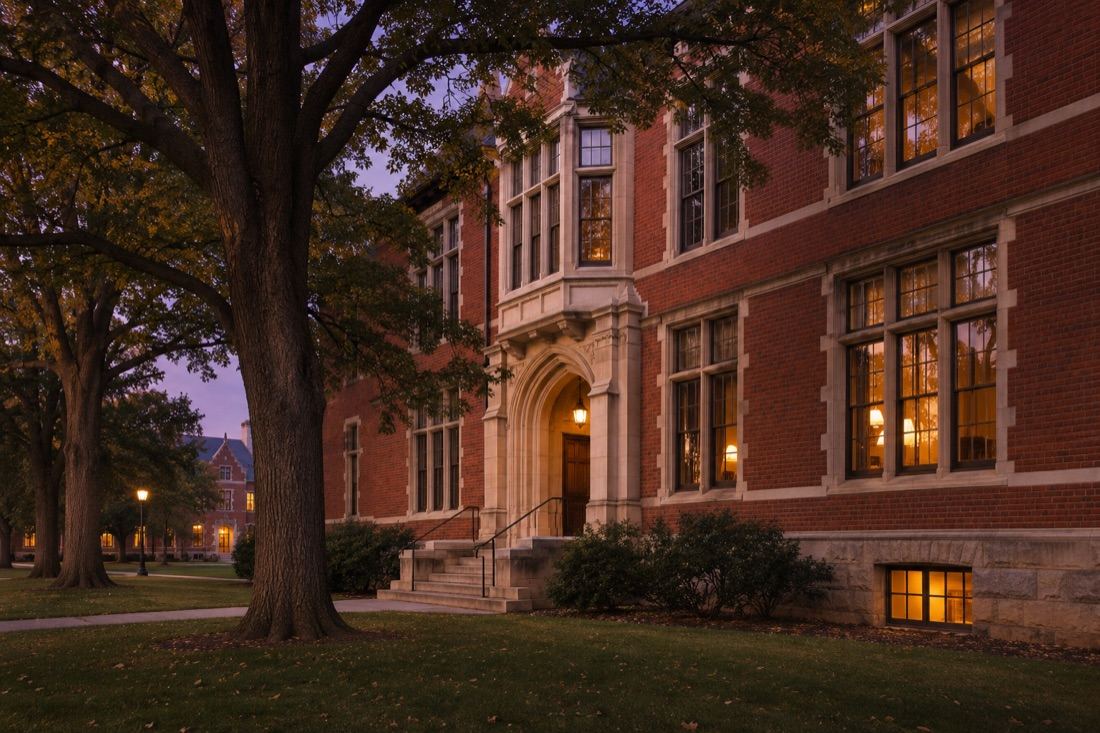
Students on the air
College radio is a broad term. A station may be a licensed FM signal, a low-power transmitter, a carrier-current system that only reaches a dorm, or an online-only stream. What they share is that a school stands behind them and students learn broadcasting by doing it: running a board, planning a show, writing news, handling the music library.
How a campus station works
Most college stations are non-commercial, so they do not run advertising. Funding usually comes from the school, sometimes with donations. A faculty or staff adviser oversees the station, while students hold the roles of program director, music director and hosts. Shows can be very specialized, from a single genre to local sports to a radio drama, because the schedule is not driven by ratings.
Music is a large part of the appeal. College stations are known for playing recordings that commercial stations do not, and record labels and independent artists send them music for that reason. Some stations also publish charts of what is played.
Why campus stations cluster low on the dial
Many US campus stations sit between about 88 and 92 megahertz. That is no coincidence. The Federal Communications Commission set aside the lower part of the FM band for non-commercial educational stations, so colleges, schools and community groups share that slice. The FM band itself starts a little below that, which is why an odd question circulates online about why nothing is allowed below 88.1: the rule is about reserved space and licence type, not a ban on a frequency.
College radio today
Stations did not disappear when streaming arrived. Many of them adapted by adding a web stream, which means that a student show in one state can have listeners in another. Some stations have shrunk, merged or been sold, so the picture varies by school. If you are curious about what your own region offers, look at the websites of nearby colleges and universities.
How to find and hear one
To hear a campus station locally, scan the low end of the FM dial, below about 92 megahertz, and note what you find. For stations away from you, visit the school's site or use a directory, and read the online listening guide for ways to stream. A related kind of station, run by a neighborhood rather than a school, is covered in the community radio guide.